
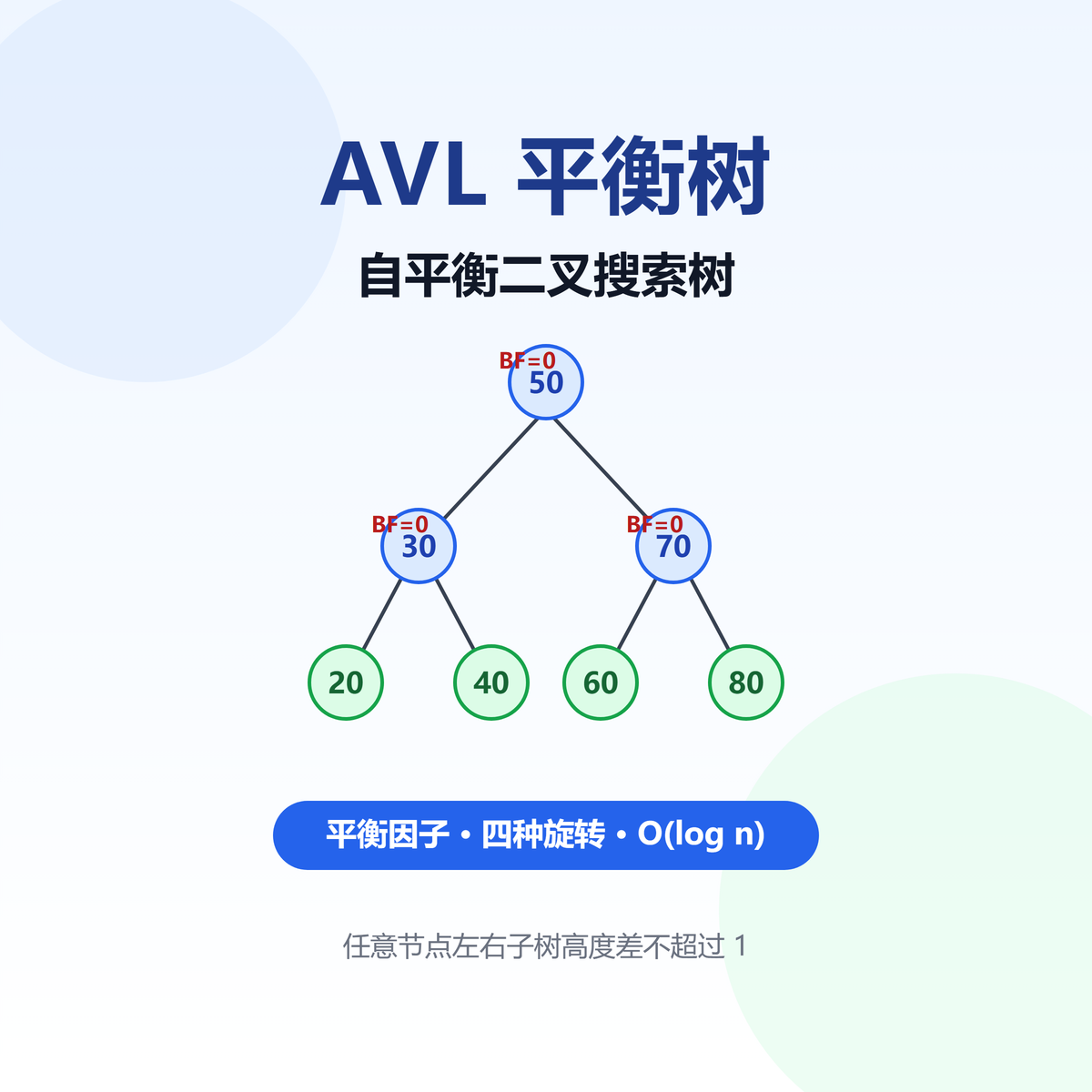
什么是 AVL 树
AVL 树是自平衡二叉搜索树:它保证任意节点的左右子树高度差(平衡因子)绝对值不超过 1,从而把查找、插入、删除的复杂度稳定在 O(log n),避免普通 BST 退化成链表的极端情况。
核心原理:平衡因子与旋转
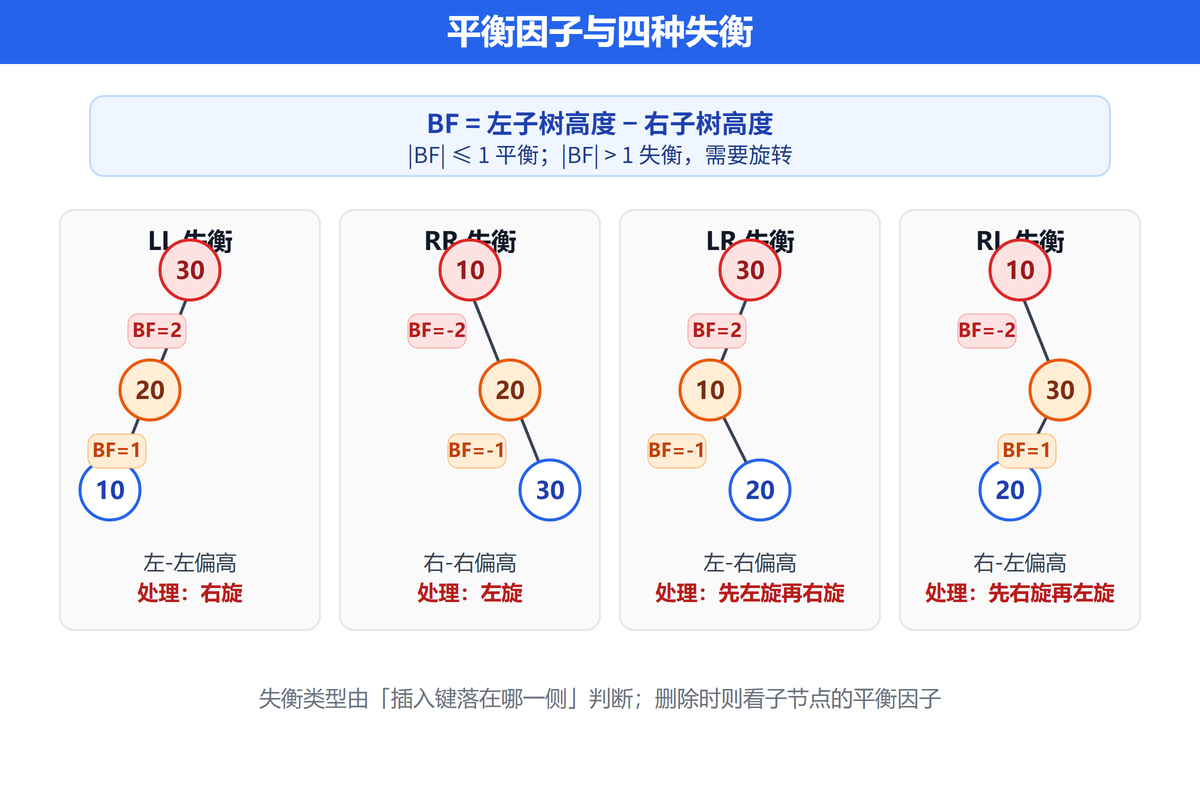
节点平衡因子 = 左子树高度 − 右子树高度。插入或删除打破平衡(|因子| > 1)时,用四种旋转恢复:
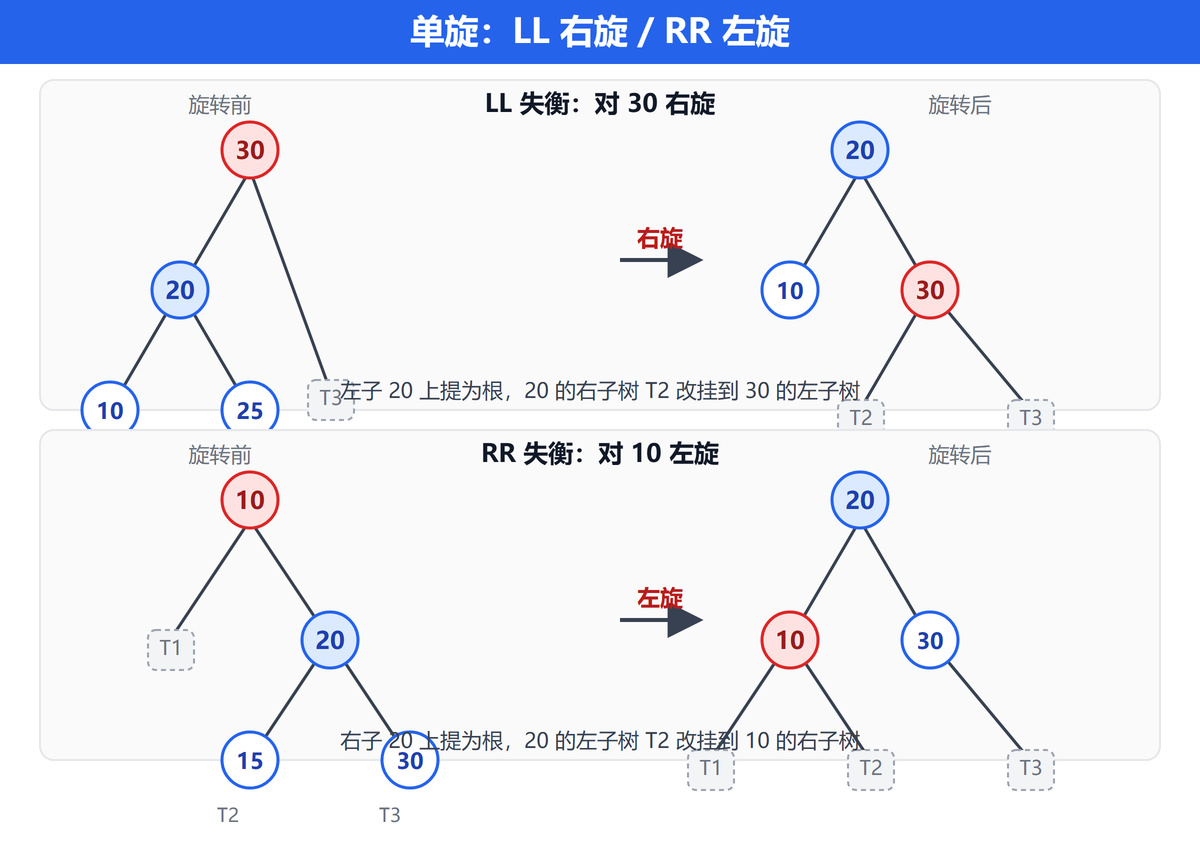
- LL(右旋):左子树偏高且”左左”失衡,对当前节点右旋;
- RR(左旋):右子树偏高且”右右”失衡,对当前节点左旋;
- LR(先左后右双旋):先对左子节点左旋,再对当前节点右旋;
- RL(先右后左双旋):先对右子节点右旋,再对当前节点左旋。
C++ 实现
#include <iostream>
#include <algorithm>

struct AVLNode {
    int key;
    AVLNode* left;
    AVLNode* right;
    int height;
    AVLNode(int k) : key(k), left(nullptr), right(nullptr), height(1) {}
};

class AVLTree {
private:
    AVLNode* root = nullptr;

    int height(AVLNode* n) { return n ? n->height : 0; }
    int balance(AVLNode* n) { return n ? height(n->left) - height(n->right) : 0; }

    // 右旋(LL)
    AVLNode* rightRotate(AVLNode* y) {
        AVLNode* x = y->left;
        AVLNode* T2 = x->right;
        x->right = y;
        y->left = T2;
        y->height = std::max(height(y->left), height(y->right)) + 1;
        x->height = std::max(height(x->left), height(x->right)) + 1;
        return x;
    }

    // 左旋(RR)
    AVLNode* leftRotate(AVLNode* x) {
        AVLNode* y = x->right;
        AVLNode* T2 = y->left;
        y->left = x;
        x->right = T2;
        x->height = std::max(height(x->left), height(x->right)) + 1;
        y->height = std::max(height(y->left), height(y->right)) + 1;
        return y;
    }

    AVLNode* insert(AVLNode* node, int key) {
        if (!node) return new AVLNode(key);
        if (key < node->key)      node->left = insert(node->left, key);
        else if (key > node->key) node->right = insert(node->right, key);
        else return node; // 不允许重复键

        node->height = 1 + std::max(height(node->left), height(node->right));
        int b = balance(node);

        if (b > 1 && key < node->left->key)        return rightRotate(node); // LL
        if (b < -1 && key > node->right->key)      return leftRotate(node);  // RR
        if (b > 1 && key > node->left->key) {                                  // LR
            node->left = leftRotate(node->left);
            return rightRotate(node);
        }
        if (b < -1 && key < node->right->key) {                                // RL
            node->right = rightRotate(node->right);
            return leftRotate(node);
        }
        return node;
    }

    AVLNode* minNode(AVLNode* n) {
        while (n->left) n = n->left;
        return n;
    }

    AVLNode* remove(AVLNode* root, int key) {
        if (!root) return root;
        if (key < root->key)      root->left = remove(root->left, key);
        else if (key > root->key) root->right = remove(root->right, key);
        else {
            if (!root->left || !root->right) {   // 0 或 1 个子节点
                AVLNode* tmp = root->left ? root->left : root->right;
                delete root;
                return tmp;
            }
            // 两个子节点:用中序后继顶替
            AVLNode* succ = minNode(root->right);
            root->key = succ->key;
            root->right = remove(root->right, succ->key);
        }
        if (!root) return root;

        root->height = 1 + std::max(height(root->left), height(root->right));
        int b = balance(root);

        if (b > 1 && balance(root->left) >= 0)  return rightRotate(root);   // LL
        if (b > 1 && balance(root->left) < 0) {                              // LR
            root->left = leftRotate(root->left);
            return rightRotate(root);
        }
        if (b < -1 && balance(root->right) <= 0) return leftRotate(root);   // RR
        if (b < -1 && balance(root->right) > 0) {                            // RL
            root->right = rightRotate(root->right);
            return leftRotate(root);
        }
        return root;
    }

    void inorder(AVLNode* n) {
        if (!n) return;
        inorder(n->left);
        std::cout << n->key << " ";
        inorder(n->right);
    }

public:
    void insert(int k) { root = insert(root, k); }
    void remove(int k) { root = remove(root, k); }
    bool search(int k) {
        AVLNode* cur = root;
        while (cur) {
            if (k < cur->key) cur = cur->left;
            else if (k > cur->key) cur = cur->right;
            else return true;
        }
        return false;
    }
    void printInorder() { inorder(root); std::cout << std::endl; }
};

int main() {
    AVLTree t;
    for (int k : {10, 20, 30, 40, 50, 25}) t.insert(k);
    t.printInorder();       // 升序
    t.remove(20);
    t.printInorder();
    std::cout << (t.search(30) ? "found 30" : "not found") << std::endl;
    return 0;
}
实现要点
- 每个节点额外存
height,旋转后先更新子树高度再更新自己; - 插入用”键值与左右子节点比较”判断失衡类型,删除则用”子节点的平衡因子”判断——两种场景的四种情况判断条件不同,容易写混;
- 删除有两个子节点时用中序后继顶替,等价于删除后继节点,然后照常回溯平衡;
- 递归插入/删除后都要先更新高度再检查平衡,顺序不能反。
复杂度与对比
- 查找/插入/删除:O(log n);空间 O(n)。
- 相比红黑树:AVL 平衡更严格、查找更快,但插入删除的旋转更多;红黑树牺牲一点查找性能换取更少的旋转。工程上(如 C++ std::map、Linux 内核)多用红黑树,AVL 更常用于教学与需要频繁查询的场景。